When Your Lakewood Home’s Drains Keep Backing Up Despite Everything You’ve Tried
You’ve already snaked the drain twice this month. The industrial-strength chemical cleaner you bought at the hardware store on Wadsworth seemed to help for a few days, but now your basement floor drain is backing up again—and this time there’s a suspicious smell creeping through your finished rec room. If you’re a homeowner in one of Lakewood’s older neighborhoods near Sloan’s Lake or along West Colfax, you’re probably dealing with decades-old sewer lines that have accumulated more grease, mineral deposits, and tree root intrusions than a simple plumbing snake can handle. This is exactly when hydro jetting becomes the solution you didn’t know you desperately needed.
What Makes Hydro Jetting Different From Traditional Drain Cleaning?
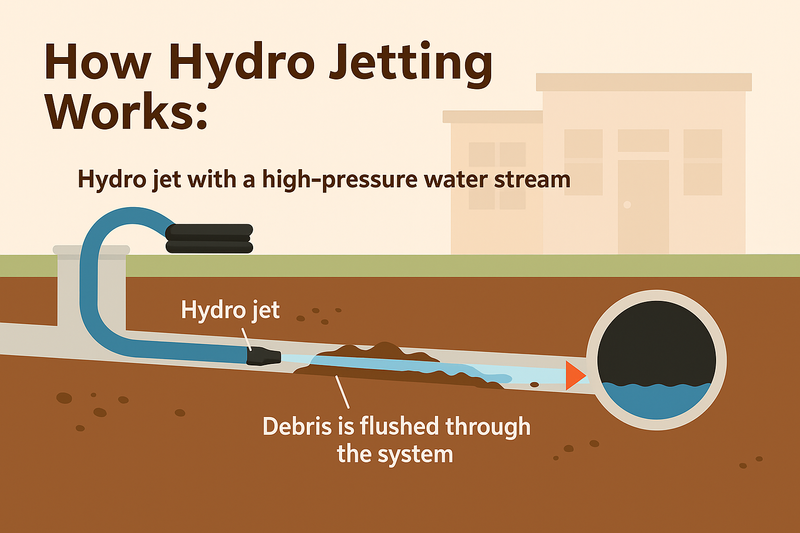
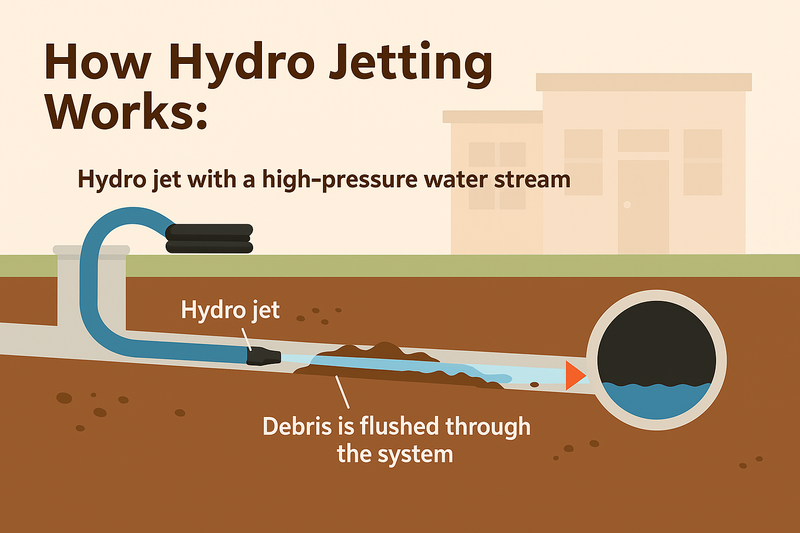
Think of a regular drain snake as using a stick to poke a hole through a clogged pipe. Now imagine hydro jetting as pressure-washing the entire interior surface of that pipe until it’s practically restored to its original diameter. A residential hydro jetting service uses specialized equipment that blasts water at 3,000 to 4,000 PSI through your sewer lines, obliterating buildup that’s accumulated over years. This matters especially in Lakewood’s 80232 area, where many homes were built in the 1950s through 1970s with clay or cast iron pipes that are particularly susceptible to root infiltration from our mature cottonwood and willow trees.
The process typically takes between 1.5 and 3 hours for a standard residential property, depending on the severity of the blockage and the length of your sewer line. A professional plumber will start by performing a video camera inspection—costing around $150 to $300 as a standalone service—to identify exactly where the problem exists and whether your pipes are structurally sound enough to withstand the high-pressure water. This step is crucial because damaged or compromised pipes could potentially be further weakened by the force of hydro jetting.
How Much Does Hydro Jetting Cost in Lakewood?
For Lakewood homeowners, hydro jetting cost typically ranges between $450 and $800 for residential service on a standard residential sewer line. Several factors influence where your project falls within that range: the accessibility of your cleanout (that capped pipe in your yard or basement), the severity and location of the blockage, and whether you need emergency hydro jetting outside regular business hours. Emergency services on evenings or weekends can add $150 to $300 to the base price, but when sewage is backing up into your home, that premium is often worthwhile.
Commercial hydro jetting runs significantly higher—usually $800 to $2,000—because commercial properties typically have larger diameter pipes, more complex drainage systems, and heavier buildup from restaurant grease traps or manufacturing residue. If you’re managing a rental property or small business in Lakewood, this is an investment worth making every 18 to 24 months as preventive maintenance rather than waiting for a catastrophic backup.
Five Warning Signs You Need Sewer Line Hydro Jetting Now
- Multiple drains backing up simultaneously: When your toilet gurgles while you’re running the washing machine, or your kitchen sink backs up when someone showers, the blockage is likely in your main sewer line—not an individual drain.
- Persistent slow drainage despite repeated snaking: If a plumber has already snaked your line twice in six months and problems keep returning, you’re dealing with buildup on the pipe walls that snaking simply pushes aside temporarily.
- Sewage odors coming from drains: That rotten egg smell isn’t just unpleasant—it indicates organic matter decomposing in your pipes, which means significant buildup has created pockets where waste can’t flow freely.
- Lush patches in your yard above the sewer line: Especially noticeable during Colorado’s dry summers, unusually green grass or vegetation can signal a leak where nutrient-rich sewage is fertilizing the soil—and hydro jetting can reveal the crack after clearing the line.
- Tree roots discovered during previous plumbing work: Once roots find their way into your sewer line, they’ll keep growing back. Annual or biannual hydro jetting keeps them under control without the expense of full pipe replacement.
Common Mistakes Lakewood Homeowners Make With Drain Problems
The biggest error is continuing to use chemical drain cleaners once you’ve identified a recurring problem. These products contain harsh acids or bases that can actually accelerate the deterioration of older pipes, particularly the cast iron lines common in Lakewood homes built before 1975. You’re essentially creating a bigger problem down the road while spending $15 to $30 per bottle on temporary relief. Another mistake is hiring the cheapest service without verifying that they’ll perform a camera inspection first—some companies will hydro jet without checking pipe integrity, potentially causing breaks that require expensive excavation and replacement.
Also, don’t assume all plumbers offer hydro jetting. This service requires specialized equipment and training, so when getting quotes, specifically ask about their hydro jetting equipment specifications, whether they include pre- and post-cleaning video inspection, and what warranty they provide on the work. A reputable company should guarantee their hydro jetting service for at least 6 to 12 months, meaning if the same blockage returns within that timeframe, they’ll re-clean it at no charge.
Finding the Right Hydro Jetting Service in Lakewood
When searching for a qualified plumbing professional in Lakewood, Colorado, prioritize companies that have served the 80232 area for at least five years and can provide references from homeowners with similar housing stock to yours. Ask specifically about their experience with homes from your era—the techniques for servicing a 1960s ranch with clay pipes differ from those needed for a newer Green Mountain subdivision home with PVC lines. Look for proper licensing, insurance, and membership in professional organizations like the Plumbing-Heating-Cooling Contractors Association, which indicates ongoing education about the latest technologies and best practices.