When Your Trenton Restaurant’s Drains Start Backing Up Mid-Dinner Rush
Picture this: it’s 7 PM on a Friday night in downtown Trenton, your restaurant is packed with diners, and suddenly your dishwasher overflows onto the kitchen floor. The three-compartment sink won’t drain. Your line cooks are ankle-deep in greasy water, and you’ve got a dining room full of hungry customers. This nightmare scenario happens more often than you’d think in Trenton’s bustling food scene, especially in older buildings around the State Street and Broad Street corridors where cast iron pipes have been battling decades of grease buildup.
The reality? Traditional snaking might buy you a few weeks, but hydro jetting could solve your drainage problems for months or even years. For restaurant owners in the 08611 area dealing with the unique challenges of commercial kitchens—from Italian eateries serving up rich pasta dishes to soul food spots with deep fryers running all day—understanding hydro jetting isn’t just smart. It’s essential to keeping your doors open.
Why Restaurant Drains Are Different (And Why Trenton’s Older Buildings Make It Worse)
Restaurant plumbing systems take a beating that residential lines never see. You’re sending gallons of cooking oil, food particles, soap residue, and organic matter down your drains every single day. Add Trenton’s freeze-thaw cycles—where winter temperatures can drop below 20°F and stress your pipes—and you’ve got a recipe for serious blockages. Many restaurant buildings in Trenton’s historic districts were built between 1920 and 1960, long before modern grease trap standards existed. These older sewer lines corrode, develop rough interior surfaces, and catch debris more easily than newer PVC systems.
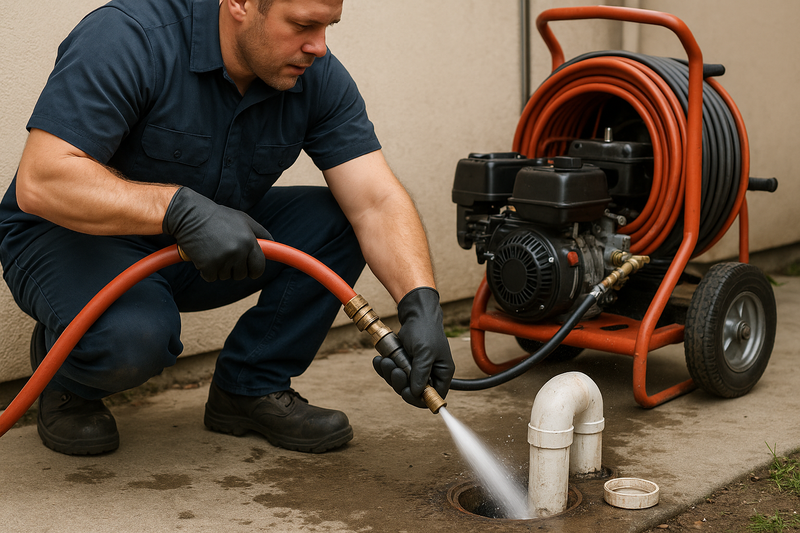
Here’s where hydro jetting service changes the game. Unlike traditional augering (snaking), which basically pokes a hole through the blockage, hydro jetting uses high-pressure water streams—typically between 3,000 to 4,000 PSI—to completely scour the inside of your pipes. Think of it like power washing your driveway versus sweeping it with a broom. One removes surface dirt; the other strips away everything down to the original surface.
What Makes Hydro Jetting the Smart Choice for Trenton Restaurants
When you’re comparing your options for dealing with persistent drain issues, understanding the pros and cons helps you make informed decisions about your plumbing budget:
- Chemical drain cleaners: Cheap upfront ($10-30), but they’re terrible for your pipes, dangerous for staff to handle, and ineffective against serious grease buildup. New Jersey environmental regulations also restrict what you can pour down commercial drains.
- Traditional snaking/augering: Costs $150-300 for restaurant hydro jetting alternatives, creates a temporary hole through blockages, but doesn’t remove buildup from pipe walls. You’ll need this done every 4-8 weeks with heavy use.
- Sewer line hydro jetting: Initial investment runs $400-800 depending on line length and blockage severity, but it removes 95-100% of buildup, lasts 6-12 months between services, and actually improves with each treatment as pipes get cleaner.
- Full pipe replacement: The nuclear option at $3,000-15,000+, only necessary when pipes are structurally compromised—which hydro jetting can actually help you avoid by preventing corrosion from sitting grease.
The Real Cost of Restaurant Hydro Jetting in Trenton (And What You’re Actually Paying For)
Let’s talk numbers. Residential hydro jetting might run $350-500 for a typical home service, but commercial hydro jetting for restaurants in Trenton typically ranges from $450-950 for a complete main line cleaning. Why the difference? Restaurant systems require more powerful equipment, longer service times (usually 2-4 hours), and specialized nozzles designed to cut through grease and food-service debris. If you need emergency hydro jetting because your kitchen is flooding during business hours, expect to pay a premium of 50-100% over standard rates—which is still cheaper than closing for the evening and losing thousands in revenue.
The hydro jetting cost varies based on several factors specific to your situation. A 100-foot main line cleaning costs less than treating 300 feet of pipe. Buildings in areas like Chambersburg or the North Ward with city sewer connections might need different approaches than properties with private septic systems. Smart restaurant owners budget for preventive hydro jetting twice yearly—spring and fall—rather than waiting for emergencies.
Questions Every Trenton Restaurant Owner Should Ask Before Hiring
When you’re vetting plumbers for commercial hydro jetting work, protect your investment with these specific questions:
- Do you have experience with commercial kitchen systems and New Jersey health code requirements?
- Will you perform a camera inspection before and after to document the condition and results?
- What PSI rating does your equipment reach, and is it appropriate for my pipe material? (Too much pressure can damage older clay or orangeburg pipes common in Trenton)
- Are you licensed for commercial plumbing work in New Jersey and properly insured?
- Can you provide references from other restaurants in the Trenton area?
- What’s your response time for emergency calls, and do you service the 08611 zip code after hours?
Finding Qualified Commercial Plumbing Help in Trenton
Your restaurant’s plumbing system directly impacts your health inspection scores, daily operations, and bottom line. Look for plumbing contractors in Trenton, New Jersey who specialize in commercial hydro jetting and understand the unique demands of food service establishments. The right professional will offer preventive maintenance plans, 24/7 emergency service for the 08611 area, and transparent pricing that helps you plan your facilities budget throughout the year.