When Your Rockton Home’s Drains Start Gurgling: The Tree Root Warning You Can’t Ignore
Last November, a homeowner on the east side of Rockton discovered their basement floor drain backing up with murky water every time someone upstairs flushed the toilet. After three attempts with a standard drain snake, the problem kept returning within days. The culprit? Aggressive tree roots from their mature silver maple had infiltrated the clay sewer pipes common in older Rockton homes—pipes that were installed decades before the 15856 area saw its recent housing updates. This scenario plays out regularly in Pennsylvania neighborhoods where beautiful, established trees and aging underground infrastructure create the perfect storm for sewer line disasters.
Why Tree Roots Target Your Sewer Lines (And Why Rockton Properties Are Especially Vulnerable)
Pennsylvania’s freeze-thaw cycles create microscopic cracks in underground pipes. Those cracks release vapor that tree roots detect from surprisingly long distances—sometimes 50 feet or more. Rockton’s mixture of clay and sandy loam soil allows roots to travel easily, and the area’s popular landscaping trees like willows, maples, and elms are particularly aggressive root producers. Once roots penetrate a sewer line, they spread rapidly inside the pipe, catching toilet paper, grease, and debris until you’re facing a complete blockage. Traditional snaking methods only poke holes through the root mass temporarily, which explains why many homeowners find themselves calling a plumber every 3-6 months. That’s where residential hydro jetting becomes the game-changer.
What Makes Hydro Jetting Different From Traditional Root Removal?
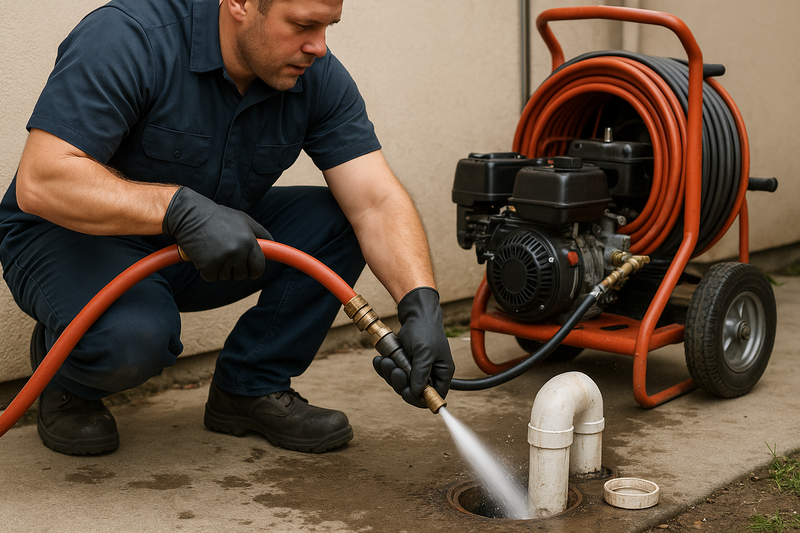
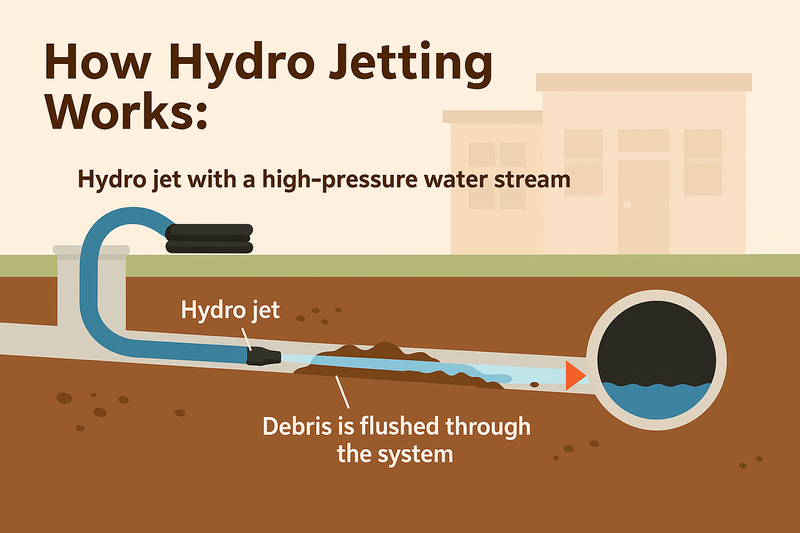
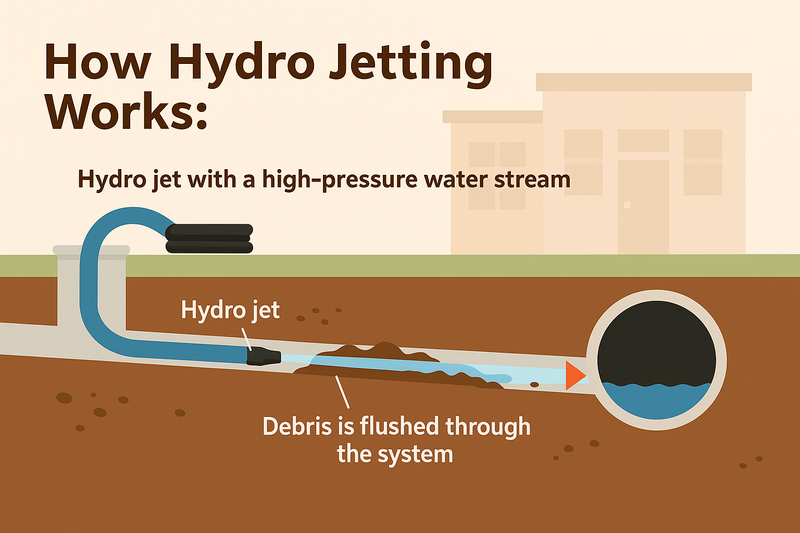
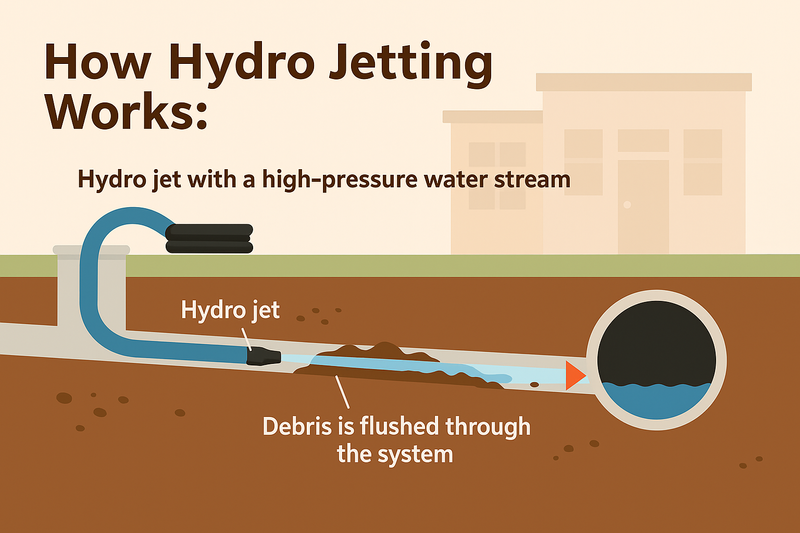
Hydro jetting service uses high-pressure water—typically between 3,000 and 4,000 PSI for residential applications—to completely scour the inside of your pipes. Unlike mechanical snakes that create a small pathway through roots, hydro jetting removes the entire root structure from the pipe walls. Think of it as pressure washing your sewer line from the inside out. The specialized nozzle shoots water forward to break up blockages while simultaneously blasting water backward at 360 degrees to scrub the pipe walls clean. For sewer line hydro jetting targeting tree roots, plumbers often use a specialized root-cutting nozzle first, followed by a finishing nozzle that removes remaining debris and creates that like-new pipe interior.
How to Know You Need Emergency Hydro Jetting (Beyond Just Slow Drains)
Not every slow drain requires immediate professional intervention, but certain warning signs indicate tree roots have progressed beyond a minor nuisance. Watch for these specific symptoms in your Rockton home:
- Multiple fixtures backing up simultaneously—especially toilets and basement drains, which connect to your main sewer line first
- Gurgling sounds from toilets or drains when you run water elsewhere in the house, indicating air displacement from a partial blockage
- Lush, green patches in your yard above the sewer line during dry spells, suggesting sewage is leaking and fertilizing that spot
- Recurring clogs in the same location despite repeated snaking attempts—the classic sign that roots are the real problem
- Foul odors near floor drains or in your basement, indicating sewage isn’t flowing properly
- Sinkholes or settling soil in your yard, which can signal a collapsed pipe from severe root intrusion
If you’re experiencing multiple symptoms, don’t wait until spring when Pennsylvania’s wet season causes ground saturation and makes repairs more complicated. Emergency hydro jetting can prevent a bad situation from becoming a catastrophic sewer backup during holiday gatherings or winter storms when getting help is more difficult.
What You’ll Pay for Hydro Jetting in the Rockton Area
Hydro jetting cost varies based on pipe accessibility, blockage severity, and total pipe length requiring treatment. In the Rockton, Pennsylvania area, homeowners typically invest between $350 and $600 for standard residential hydro jetting of a main sewer line. That price usually covers up to 100 feet of pipe. Severe root intrusion might push costs toward $800-1,200 if your plumber needs to hydro jet multiple times or address especially stubborn root masses. Emergency hydro jetting services—those late-night or weekend calls—typically add a $150-250 premium, but preventing sewage backup in your finished basement is worth every penny.
Compare this to repeated snaking at $175-300 per visit. If you’re calling a plumber three times annually, you’re spending more money while never actually solving the problem. Commercial hydro jetting for larger properties with extensive piping runs significantly more, but for typical residential applications, hydro jetting offers excellent value considering it can keep your lines clear for 3-5 years when combined with proper maintenance.
The Smart Follow-Up: Protecting Your Investment After Hydro Jetting
Once you’ve invested in professional hydro jetting, protect those clean pipes. Ask your plumber about copper sulfate or foaming root killers applied quarterly through your cleanout—these prevent new root intrusion without harming your trees. Consider scheduling a sewer camera inspection annually, which costs around $200-300 in the 15856 area and catches problems before they become emergencies. If your inspection reveals significant pipe damage, discuss trenchless pipe lining, which creates a new pipe inside your old one and eliminates future root problems for decades.
Finding a Qualified Hydro Jetting Professional in Rockton
When searching for plumbing services in Rockton, Pennsylvania, ask potential contractors about their hydro jetting equipment specs (residential jobs need 3,000+ PSI capability) and whether they include a post-service camera inspection to verify complete root removal. Licensed plumbers familiar with Rockton’s older clay pipe infrastructure will know how to adjust pressure to clean effectively without damaging compromised pipes—a crucial distinction that protects your investment and your property.