When Your Basement Floor Drain Backs Up During Spring Thaw
Picture this: It’s early March in Douglas, and the snow’s finally melting after another brutal Nebraska winter. You head downstairs to check on things, only to find murky water pooling around your basement floor drain. That unmistakable sewer smell hits you immediately. Your main sewer line—buried beneath frozen ground for months—has decided now is the perfect time to give up the ghost. Before you panic and start calling every plumber in the 68344 area, let’s talk about why main line hydro jetting might be exactly what your home needs and how to make smart decisions when your plumbing system throws you this particular curveball.
What Makes Main Line Hydro Jetting Different From Regular Drain Cleaning?
Here’s the thing about main sewer lines in Douglas: they take a beating. Our clay soil expands and contracts with freeze-thaw cycles, putting pressure on pipes. Many homes in older sections of town still have cast iron or even clay tile sewer lines that are 50, 60, or 70 years old. Tree roots from those beautiful mature elms and oaks? They’re aggressively seeking moisture, especially during our dry summer months, and your sewer line is prime real estate.
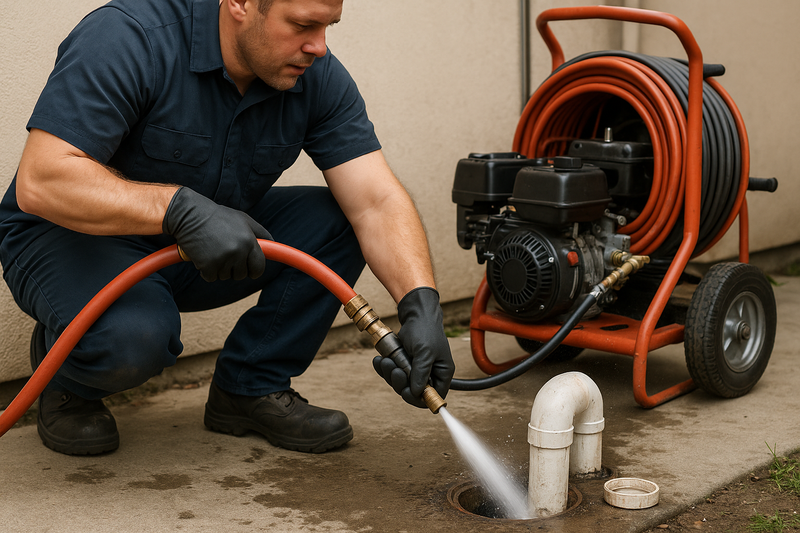
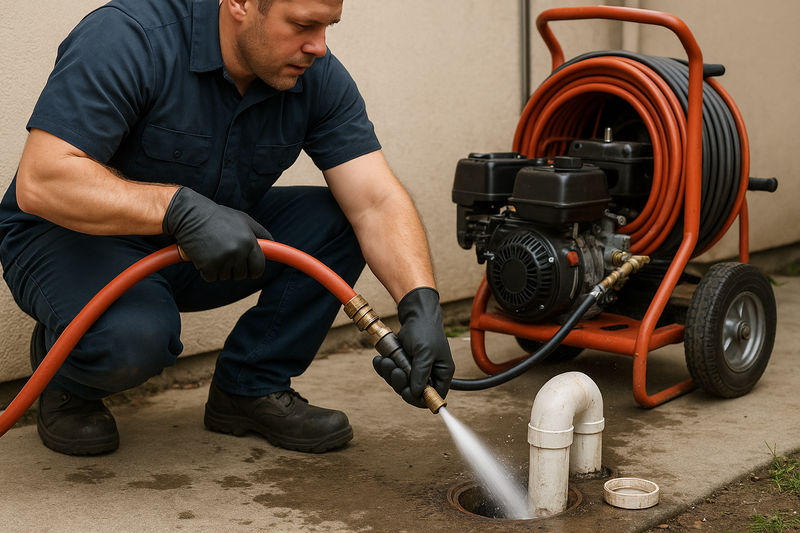
Traditional drain snaking might poke a hole through a clog, but hydro jetting completely scours your pipes clean. This process uses specialized equipment that shoots water at pressures between 3,000 and 4,000 PSI through your main line. To put that in perspective, your garden hose operates at about 50 PSI. This high-pressure water doesn’t just break through clogs—it strips away decades of grease buildup, pulverizes tree roots, and removes scale and mineral deposits that have been narrowing your pipe diameter. The result? Your 4-inch main line actually functions like a 4-inch line again, not a 2-inch one.
Five Warning Signs Your Main Line Needs Professional Attention
- Multiple fixtures backing up simultaneously: When flushing the toilet causes your shower drain to gurgle or overflow, that’s not a coincidence—it’s a main line problem
- Persistent sewer odors coming from drains, especially in your basement or lower-level bathrooms
- Slow drainage throughout the house that doesn’t improve with individual fixture treatment
- Lush patches of grass above your sewer line path, indicating a leak that’s fertilizing your lawn
- Repeated clogs in the same location even after snaking—this suggests buildup that requires more aggressive cleaning
Understanding Hydro Jetting Costs and What You’re Actually Paying For
Let’s talk numbers because nobody likes surprise bills. For residential hydro jetting service in Douglas, you’re typically looking at $350 to $600 for a standard main line cleaning. That’s considerably more than the $150 to $250 you’d pay for traditional snaking, so what’s the difference? First, hydro jetting requires expensive specialized equipment—a professional-grade jetter runs $15,000 to $40,000. Second, it takes expertise. Your plumber needs to assess your pipe’s condition first, because hydro jetting can damage already-compromised pipes. A reputable contractor will always run a camera inspection (usually $200 to $350 as a standalone service) before recommending hydro jetting.
Emergency hydro jetting—when you need service immediately because sewage is backing into your home—will cost more, typically $500 to $900 depending on time of day and complexity. However, here’s where it gets interesting: while the upfront cost is higher, sewer line hydro jetting often lasts 3 to 4 times longer than snaking. If you’re calling a plumber every six months to snake your line at $200 a pop, spending $500 for hydro jetting that keeps you clear for two years suddenly makes financial sense.
The Three Mistakes Douglas Homeowners Make When Choosing Main Line Cleaning
The biggest error? Assuming all clogs need the same treatment. Some homeowners waste money on hydro jetting when a simple snake would suffice; others keep snaking a line that desperately needs the comprehensive cleaning only hydro jetting provides. A proper camera inspection reveals the actual condition and helps your plumber recommend the right solution. Second mistake: choosing based solely on price. The cheapest quote often comes from contractors who skip the camera inspection or use inadequate equipment. You want a company with a truck-mounted jetter capable of sustained high pressure—not a homeowner-grade machine from the hardware store. Third: ignoring Nebraska’s seasonal realities. Scheduling preventive main line hydro jetting in late fall, before winter freezes set in, can prevent those messy spring backups when contractors are slammed with emergency calls.
Questions to Ask Before Hiring a Hydro Jetting Contractor
When you’re getting quotes for hydro jetting service in the Douglas area, ask these specific questions: Does the price include a pre-inspection camera run? What PSI rating does their equipment provide? Can they show you the camera footage so you understand what’s happening in your pipes? Will they provide documentation if they discover pipe damage that needs repair rather than just cleaning? And critically for our area: Do they have experience with the specific pipe materials common in Douglas homes—cast iron, clay tile, and Orangeburg (that compressed fiber pipe used in many 1950s homes)?
Finding the Right Plumbing Professional in Douglas
When your main sewer line needs serious attention, you want a plumbing company that combines modern hydro jetting technology with deep knowledge of Douglas-area homes and their unique challenges. Look for licensed, insured contractors serving the 68344 area who can explain exactly what’s happening in your pipes and why they’re recommending a specific approach. The right professional won’t just fix today’s backup—they’ll help you understand your system and plan for its long-term health.