When Your Sewer Line Becomes a Tree Nursery: North Bethesda’s Hidden Root Problem
Last spring, a homeowner near Garrett Park discovered why her toilets had been gurgling for weeks. After spending $200 on drain cleaners and enduring three plumber visits with a mechanical snake, a camera inspection revealed the real culprit: tree roots from the magnificent oak in her front yard had infiltrated her clay sewer line, creating a dense web that no amount of augering could fully remove. Within 48 hours, she needed a complete solution. That’s when she learned about hydro jetting—the only residential hydro jetting method powerful enough to scour those roots away without excavating her entire front lawn.
If you own a home in North Bethesda, particularly in the older neighborhoods around Old Georgetown Road or Tuckerman Lane where properties were built in the 1950s through 1970s, you’re living with a ticking time bomb. These homes typically have clay or cast iron sewer pipes—materials that develop small cracks and separations over time. Our mature tree canopy, one of the things that makes the 20895 area so beautiful, becomes a liability once those tree roots detect moisture in your sewer line. They’ll infiltrate through joints and cracks, expanding until they create complete blockages.
How Does Hydro Jetting Actually Destroy Tree Roots?
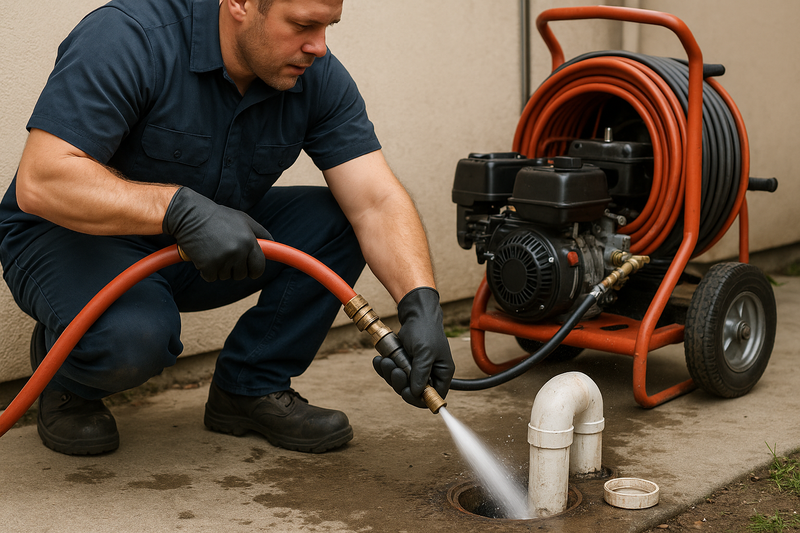
Unlike traditional snaking that punches a temporary hole through root masses, hydro jetting service uses pressurized water—typically 3,000 to 4,000 PSI—blasting through your pipes in all directions. The specialized nozzle moves forward while shooting water backward and sideways, pulverizing roots into tiny fragments that flush away with the water flow. Think of it as a pressure washer on steroids, designed specifically for sewer line hydro jetting applications.
Here’s what happens during a professional hydro jetting session for tree roots:
- Camera inspection first (30-45 minutes): A technician feeds a waterproof camera through your cleanout to identify root locations, pipe material, and any structural damage. This step is crucial—hydro jetting can damage already-compromised pipes, so you need to know what you’re working with.
- Access point preparation (15 minutes): The team typically works through your main cleanout or, if necessary, removes a toilet to access the line. In North Bethesda, most cleanouts are located in basements or in yard boxes near the foundation.
- Hydro jetting process (1-2 hours): A flexible hose with a specialized root-cutting nozzle enters your line. Water pressure does the work, cutting through roots and flushing debris toward the municipal connection. For severe infestations, technicians may make multiple passes.
- Post-cleaning inspection (20 minutes): Another camera pass confirms the roots are gone and reveals the pipe’s actual condition underneath. You’ll often see video evidence of clean pipe walls.
- Treatment recommendations (variable): Based on what they find, professionals might suggest root barriers, pipe lining, or chemical root treatments to prevent regrowth.
What You’ll Pay for Hydro Jetting in North Bethesda
Hydro jetting cost varies considerably based on accessibility and severity. In the 20895 area, expect these ranges: basic residential hydro jetting for accessible lines runs $350-$600, while complex situations with multiple cleanouts or severe root infiltration can reach $800-$1,200. Emergency hydro jetting services—available 24/7 for complete backups—typically add a $150-$300 premium to standard rates. Commercial hydro jetting for larger diameter pipes or extensive systems starts around $1,000.
Compare this to repeated snaking visits at $175-$250 each that provide only temporary relief, and hydro jetting becomes cost-effective after just 2-3 service calls. More importantly, it’s preventive. One thorough hydro jetting session can keep lines clear for 2-4 years, depending on tree proximity and pipe condition.
Warning Signs You Can’t Wait Another Week
Some situations demand immediate professional attention. Call for emergency hydro jetting if you’re experiencing multiple slow drains throughout your house, sewage backing up into tubs or showers (especially lower-level fixtures), or persistent sewage odors in your yard near the sewer line. In North Bethesda’s older neighborhoods, these symptoms during Maryland’s heavy spring rains often indicate roots have created near-total blockages. Water has nowhere to go except back into your home.
Here’s a mistake many homeowners make: assuming chemical root killers will solve the problem. Products containing copper sulfate or foaming root destroyers might slow root growth, but they won’t remove existing masses. They’re preventive maintenance tools, not solutions for established infestations. Another costly error is requesting hydro jetting without a pre-inspection. If your 60-year-old clay pipes have significant cracks or collapses, the water pressure could worsen the damage, necessitating expensive excavation and replacement.
Maryland’s Freeze-Thaw Cycle Makes This Worse
Our climate compounds the root problem. North Bethesda experiences significant freeze-thaw cycles each winter, causing soil expansion and contraction that stresses aging sewer lines. This creates more entry points for opportunistic roots. Spring’s heavy rainfall—we average 3-4 inches in April and May—then accelerates root growth as trees seek moisture. If you’re planning hydro jetting, late winter or early spring offers ideal timing: you’ll remove roots before the growing season while addressing any winter damage.
Finding Qualified Hydro Jetting Professionals in North Bethesda
When requesting quotes from plumbers serving the 20895 area, ask whether they perform camera inspections before and after jetting, what PSI rating their equipment provides (3,000+ is standard for roots), and if they’re licensed in Montgomery County. Reputable contractors will refuse to hydro jet without first assessing your pipe’s structural integrity—that’s protecting you, not upselling. Look for plumbing professionals who can discuss root prevention strategies beyond just the immediate cleaning, because addressing tree roots is ongoing property management, not a one-time fix.